We entered the Flatness Era.
Technology is making competence easier to simulate and quality easier to produce.
Flatness does not mean lower quality.
It means compression toward the middle.
The average gets better. The extreme competencies become harder to distinguish.
Lower variance.
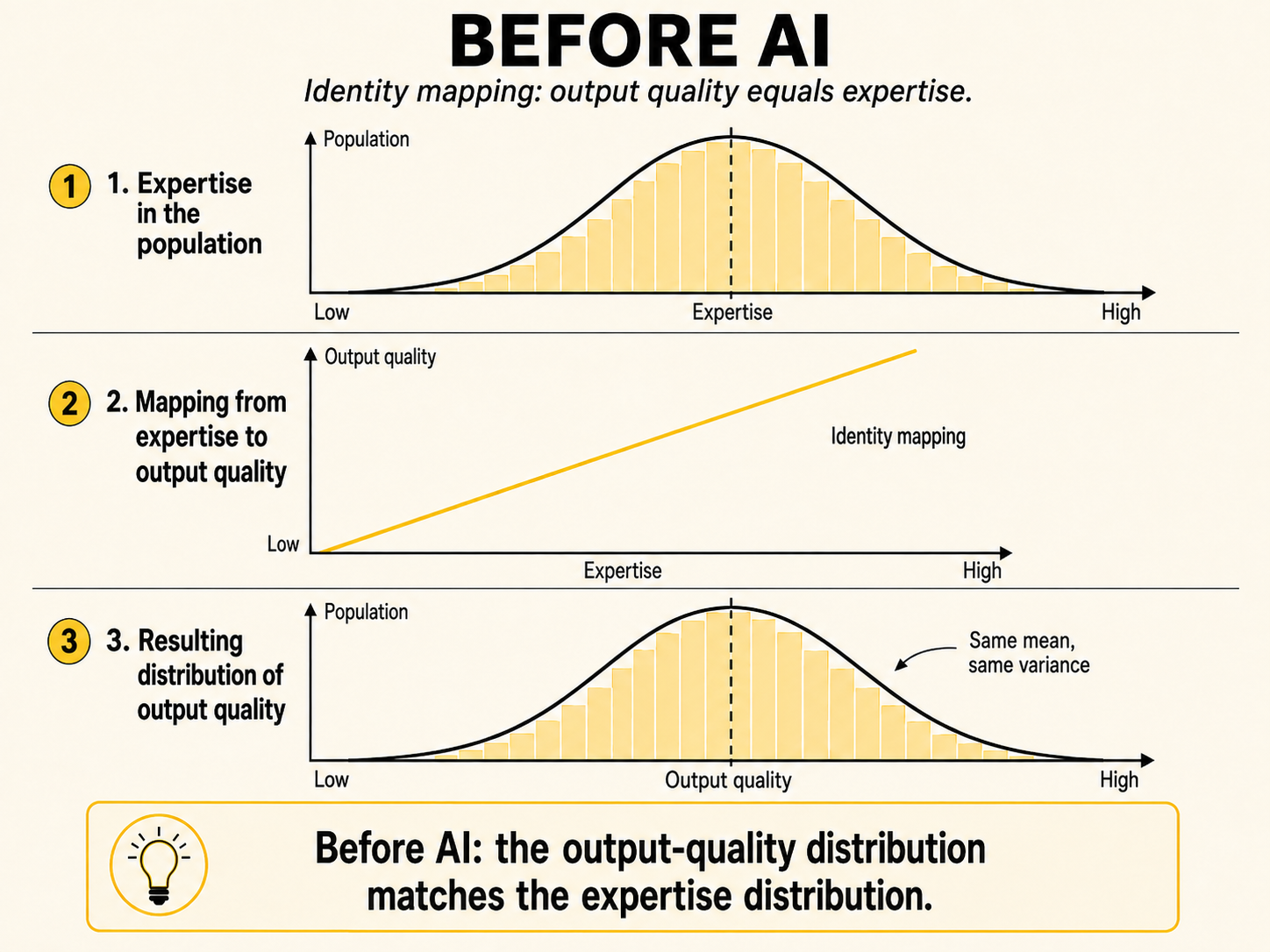
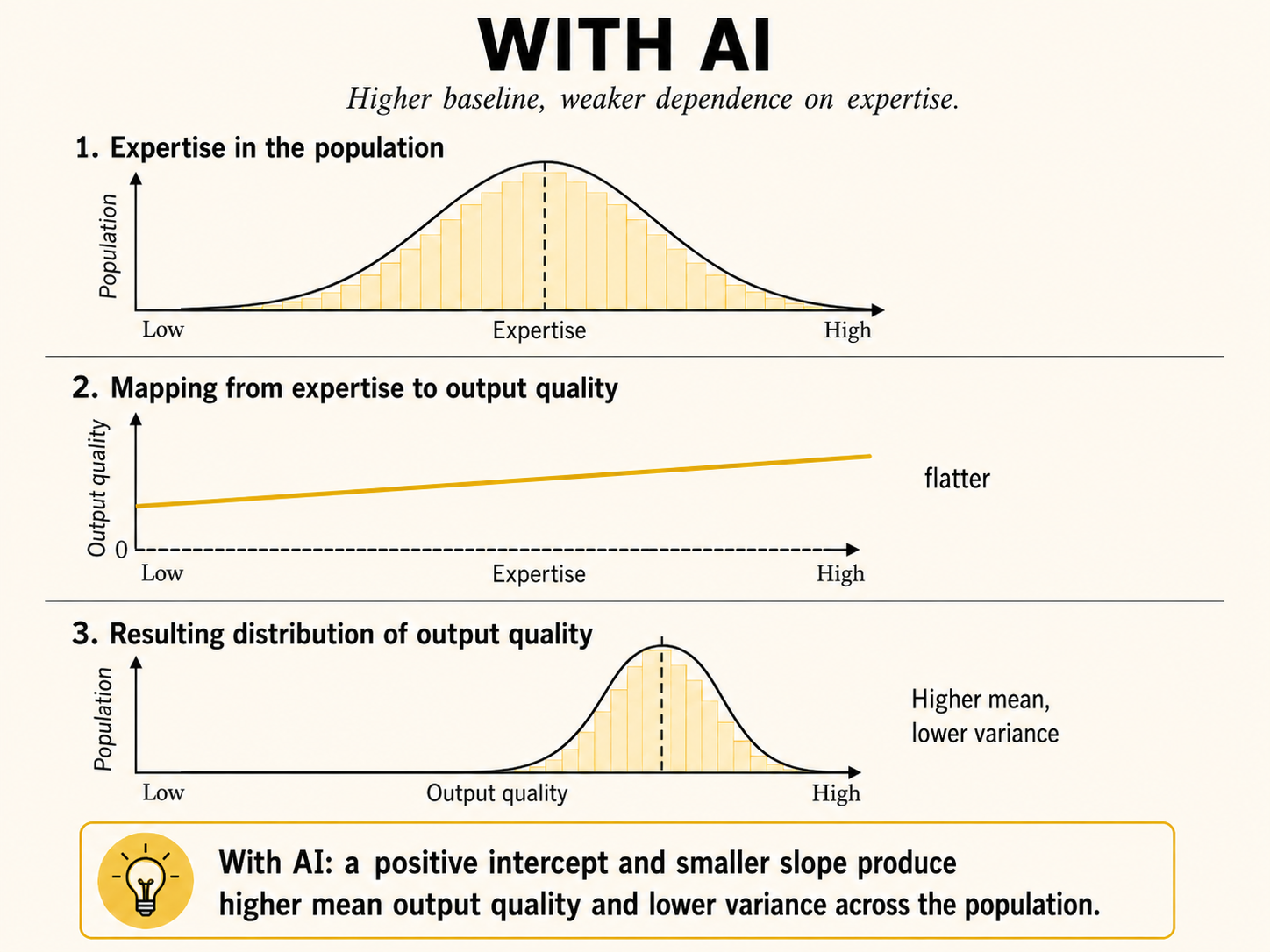
A beginner can now take a great photo, build software, design a striking website, write polished prose or generate music using tools that already contain enormous amounts of accumulated expertise.
This raises the floor.
But it also changes what an artifact tells us.
A piece of software used to reveal something about how its author understood software.
A photograph revealed something about how the photographer understood light and composition.
A text revealed something about the structure of the writer’s thought.
Increasingly, that connection is weaker.
The digital artifact is becoming detached from the mental model, intellectual structure and competence of the person who produces it.
You can produce code you cannot explain.
A visual identity you could not design from first principles.
An argument you have not fully thought through.
A website that looks culturally sophisticated without possessing the references or design judgment behind it.
The artifact can now be more sophisticated than the mind behind it.
AI accelerates this dramatically.
It does not only make conventional output easier.
It also makes unconventional output easier.
Ask for minimalism, and you get minimalism.
Ask for brutalism, and you get brutalism.
Even difference can become a commodity.
This means the Flatness Era is not necessarily a world where everything looks the same.
It may contain enormous stylistic variety.
But that variety can be superficial.
The appearance of originality becomes easier to produce than originality itself.
This is where flatness becomes difficult to see.
The artifact used to be evidence of competence.
Increasingly, it is evidence that you had access to the right tool.
Beginners are pulled upward.
Experts are pushed into the same systems because speed, compatibility and efficiency win.
The distance between them becomes harder to see.
This can be detrimental to both experts and beginners.
Beginners may lose the opportunity to build their skills the hard way, developing deeper knowledge through practice, mistakes and friction.
Experts, meanwhile, may be compared directly with beginners and eventually replaced by less expensive people who can produce shallow output that looks very similar to what an expert can produce.
This is modern mediocrity.
Not bad quality.
AI makes acceptable output nearly free.
Soon, distinctive-looking output may become nearly free too.
And once quality and style become abundant, they stop being scarce signals.
What remains scarce is different:
Not something that merely looks different.
Something that comes from a genuinely different way of seeing.
And this raises a harder question:
We spent decades teaching machines how to remove mistakes.
Now we may need to learn how to preserve deviation, understanding and judgment.
The future does not need more polished output.
It needs edges.
the mean.